Seventeen years ago, I failed my first ever martial arts exam. I was stressed going into it, tight in my body, overthinking everything, worrying. The re-test was coming up and I wasn’t feeling much better about it.
The morning of the re-test I had my first shiatsu treatment. I didn’t really know what to expect, but when I walked into the dojo that evening, something was different. The mats felt soft under my feet, my mind and body felt connected, I felt calm. I passed, and while that is well in the rear view mirror now, I share aspects of this story of failure with martial artists I work with in preparation for their upcoming gradings.
I kept going to shiatsu after that. Sometimes just for maintenance, sometimes for specific things like injuries, tension in joints and muscles, or tension of the mind. Eventually I started learning shiatsu myself at the Saskatoon Shiatsu Center, and now I get to be part of those moments when someone discovers what shiatsu can do for them.
What is Shiatsu?
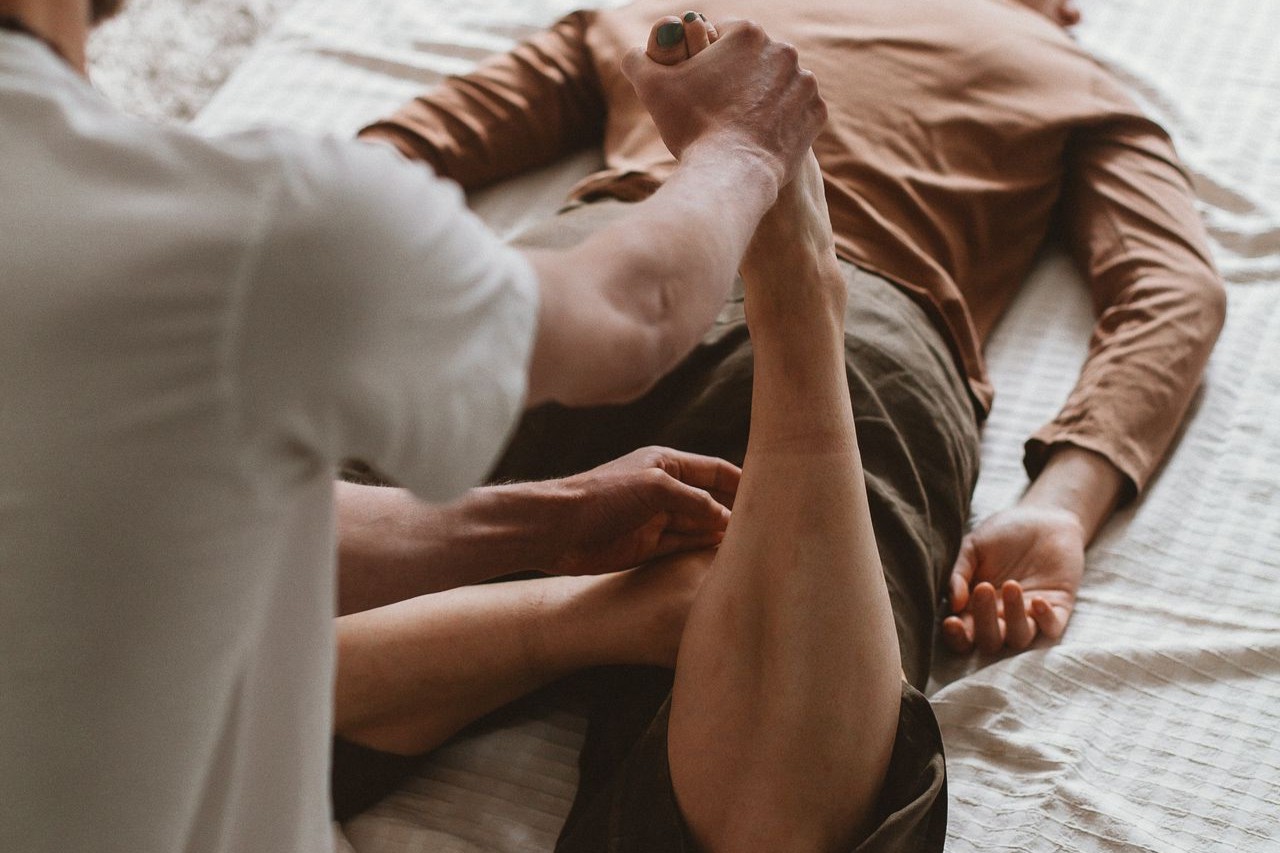
Shiatsu is a Japanese bodywork technique that applies pressure along pathways in the body called “meridians”. In that way, it’s similar to acupuncture, but without needles. Shiatsu translates to “finger pressure,” though in the style I practice it can involve palms, elbows, joint mobilization, and stretches too.
Using sustained pressure on ‘tsubo’ (pressure points), one hand applies pressure while the other monitors your body’s response. This helps release muscle tension (Brady et al., 2001; Yuan, Berssaneti & Marques, 2013) and calm your stress response (Northern College of Acupuncture, n.d., Long, 2008). Where there’s tension or high energy (jitsu), we sedate it. Where there’s low energy (kyo), we tonify it. The work helps you, the client, start to listen to and feel these patterns too.
Because shiatsu treats the 12 median systems and 2 sub systems, it is an overall approach correcting issues. When someone comes in with shoulder pain, I’m not just working on their shoulder. Together we examine their overall condition. What caused this imbalance? And by walking through the meridians together we often find related and contributing issues to what they came in for.
Shiatsu can help with physical tension as well as mental and emotional stress (Brady et al., 2001; Yuan, Berssaneti & Marques, 2013) and calm your stress response (Northern College of Acupuncture, n.d.). These often show up together. Clients dealing with ongoing stress or anxiety frequently carry that as pain, stiffness, or chronic tension in the body. Whether it’s back pain,[Brady et al., 2001; Kobayashi et al., 2019) headaches (Villani et al., 2017), anxiety (Northern College of Acupuncture, n.d.), or trouble sleeping (Yuan, Berssaneti & Marques, 2013;Kobayashi et al., 2023) shiatsu can be of help.
Is Shiatsu Right for You?
Imbalance along the meridians shows up differently for everyone. Some clients come for sports injuries, headaches, arthritis, muscle aches, tendonitis, sciatica, carpal tunnel, digestive issues, chronic constipation, fatigue, trouble sleeping. Others come for stress reduction and maintenance. One study of shiatsu found maintaining good health was the most common reason clients booked their sessions (Long, 2008). Sometimes it’s for one thing, other times it is for a combination of symptoms. Shiatsu can be a complementary practice alongside other care and wellness approaches you’re using (Long, 2008.; Robinson, Lorenc & Liao, 2011.).
There are some conditions where shiatsu isn’t the right fit. If you’re pregnant, dealing with active infections or fever, cancer, bleeding disorders, recent fractures, or other acute conditions, it might not be the right time. These are known as contraindications and every bodywork style has conditions where a practitioner should not treat a client.
What to Expect in a Session
A shiatsu session starts with a brief conversation to learn about any specific goals or concerns you may have. You stay fully clothed, so wear something loose and comfortable. The session happens on a mat on the floor, which is traditional. Some practitioners use tables but I work on a mat on the floor.
During the session we work through the meridians, head to toe, on your back, stomach, and sides. You’ll feel sustained pressure on specific points, stretching, and joint mobilization. Sessions usually run 60 to 90 minutes. How often you come depends on what we’re working on. Acute issues might need a few sessions close together (e.g. once a week). Chronic problems require a more sustained approach. Some people come for maintenance, once a month or so, to keep things balanced before issues develop.
Many people find the treatment relaxing and grounding. When I’m working on areas with tension or imbalance, you might feel some discomfort. That’s normal and tells us where we need to work. Afterwards you might feel looser, calmer, clearer. You might also feel tired or a bit sore for a day or two as your body adjusts. That’s normal too.
If you’re interested in more, I hope you can find a shiatsu practitioner near you.
References
Brady, L.H., Henry, K., Luth, J.F., & Casper-Bruett, K.K. (2001). The effects of shiatsu on lower back pain. Journal of Holistic Nursing, 19(1), 57-70.
Kobayashi, D., Shimbo, T., Hayashi, H., & Takahashi, O. (2019). Shiatsu for chronic lower back pain: Randomized controlled study. Complementary Therapies in Medicine, 45, 33-37.
Kobayashi, D., Takahashi, O., Hayashi, H., & Shimbo, T. (2023). The Effect of Shiatsu Therapy on Sleep Quality in Patients With Low Back Pain: A Secondary Analysis. Holistic Nursing Practice, 37(2), 71-77.
Long, A.F. (2008). The effectiveness of shiatsu: findings from a cross-European, prospective observational study. Journal of Alternative and Complementary Medicine, 14(8), 921-930.
Northern College of Acupuncture. What is the effect of Shiatsu on anxiety as measured by the State Trait Anxiety Inventory? A Crossover Trial.
Robinson, N., Lorenc, A., & Liao, X. (2011). The evidence for Shiatsu: a systematic review of Shiatsu and acupressure. BMC Complementary and Alternative Medicine, 11:88.
Villani, V., Prosperini, L., Palombini, F., Orzi, F., & Sette, G. (2017). Single-blind, randomized, pilot study combining shiatsu and amitriptyline in refractory primary headaches. Neurological Sciences, 38(6), 999-1007.
Yuan, S.L.K., Berssaneti, A.A., & Marques, A.P. (2013). Effects of Shiatsu in the management of fibromyalgia symptoms: A controlled pilot study. Journal of Manipulative and Physiological Therapeutics, 36(7), 436-443.
Leave a Reply