
I think the only way to describe this conference is “jam packed”. 20-25 minute sessions back to back to back to back to back. It’s a lot to take in, and some of it definitely sticks and some of it runs off of your already over saturated brain. Today certainly had it’s highlights though:
Open Educational Resources: the learning model and sustainability strategy matter
These presenters from U Maryland College (a military school) revised over 1000 courses over the 2015/2016 year in order to replace all of their textbook materials and course notes with OER. The goal was certainly aggressive, and often with these types of projects it’s about pulling an Indiana Jones with the content.
So the journey began. Enter one course, review the material, find suitable OER to replace commercial products, close the lid and move on. But taking this approach siloes the material, siloes the courses, and siloes the entire process. Without a way to share information or form a taxonomy they ended up with basically a shoebox full of materials. Still useful, but not well organized. They mentioned that when all was said and done that they had 17 separate resources on what maintaining an investment in a single business program. Now that might be helpful if it was designed that way (choral explanations), but it wasn’t. They’re now going through the materials and tagging each OER based on topic, competency, etc. The main takeaway – apply curriculum development and instructional design approaches at the beginning of a transition to OER project.
10 years educamps and 6 years oer camps
This was a really interesting presentation. I’ve been involved in planning all types of events: tutorials, workshops, presentations, teaching festivals, mini conferences, mini unconferences, studio sessions etc, but never an educamp. The idea has always appealed to me though as it blends a flexibility and community driven aspects to planning with a studio style environment where learning and work can take place.
educamps twice per year, no conference fees. subsidiaries for bringing children visible impact on accessibility for attendants. ‘kids’ even participate and provide their own sessions. #OEGlobal18
— JR Dingwall (@JRDingwall) April 24, 2018
The basic idea is that everyone who attends the event sets the agenda in the first part of the camp, then everyone moves to their breakout sessions. The presenters outlined golden rules for a successful camp:
- no division between speakers & participants
- the schedule is determined on site, and collaboratively
- rooms are centered around discussions and working groups
- less formal – you make the difference!
- there is no need for a presentation, what’s most important is having a question
- there are as many sessions as there are rooms
- minimum attendance is just 2!
- one person can facilitate any number of sessions
- never doubt the timetable (45 minute sessions)
- document each session, and
- you can leave a session at any time
Machine Learning and AI
There were a couple of tools and prospects presented in this session. There were a number of different tools I saw at this conference that had a similar sort of idea around curating resources. In this case it was Book like thing platform where students begin to construct a book like thing or a “thoughtsaurus” and the machine is supposed to reflect back to the students other resources that may be helpful and are related. Students are able to ‘like’ different materials to organize and let the machine know that those are preferred resources. It does not operate the same way that traditional search works and the presenters framed it as; rather than your search being wrong the results failed to understand your search. An interesting spin. The audience did raise questions about this simply perpetuating a filter bubble. I do like the idea of the “thoughtsaurus” but I feel there are ways we can do that without splashing ML and AI around (fedwiki’s The Happening II was a great example of creating one of these).
The second part of this presentation is what troubled me. There was a brief demo and description of using ML and AI to generate multiple choice question banks. This auto generation of test questions has been around for a long time. It’s simple enough in math related courses where you can create an infinite number of questions that fit into a formulaic format. And sure practice makes perfect in some cases, but
Using new technology too create large assessment banks one way to get buy in for OER use. I think we need to ask if new tech are simply reinforcing the status quo. Assessment is hard but worth thinking deeply about in teaching. #OEGlobal18
— JR Dingwall (@JRDingwall) April 24, 2018
I’ve said it before and I’ll say it again. Maybe if we are so concerned about our exams (particularly MCQ style exams), especially as more online delivery of exams takes place, that we should pause and think about the assessment rather than using tech to prop up what’s often weak assessment practices. Using MCQ style questions and formats is old news and many still don’t do a great job at it, so no, I don’t believe having a machine auto create a bunch of questions based on a user inputs will have a positive impact on education. At best is reinforces a low status quo, at worst it diminishes learning potential.
Project Estafettes: online hands-on learning with peer feedback and appraisal
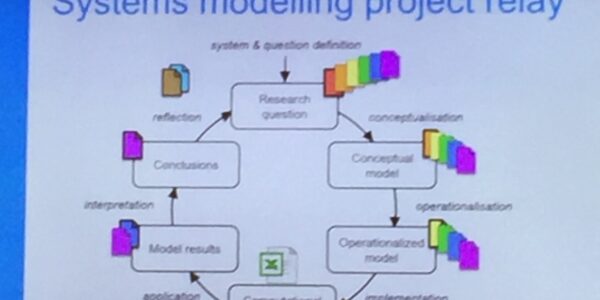
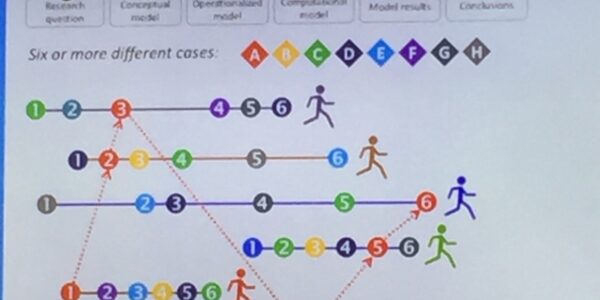
I’ve been working with a number of instructors over the past few years to integrate more peer feedback opportunities in their courses. This has been working particularly well in courses with a lot of writing, graduate level courses where the final paper is the main focus of the assessment, lab projects throughout a term in science courses at the undergrad level, etc. The concept presented in this session took typical peer feedback and groupwork approaches and flipped them on their side. The basic idea is that there are a few, multi-step open ended projects/assignments in the course. Students are assigned to complete step 1 for a specific project. When that is complete, they hand it off to the next student who reviews, appraises, and provides feedback on the previous step. After that, student 2 completes step 2 on that project. This continues until the all the projects are complete. Obviously, where grades and peer feedback are in place a solid assessment and appeals processes need to be in place, but the instructor was very positive about how it’s gone so far. They currently use this method in engineering and policy analysis courses, but I could see this being applied in a number of other disciplines as well.
Collaborative OpenCourseWare Authoring: The SlideWiki Platform
When I first heard of Slidewiki I think I imagined something a little more like parallel hypertext than LMSy/courseware/commons repository. Maybe that is because I am just hoping deep down to see more courses and OER projects like Mike Caulfield’s The Happening. SlideWiki seems to ring of a familiar sound to a number of other tools I saw at the conference and am seeing more and more frequently. From that Machine Learning BBooks X thing from Penn State, to FeedbackFruits, to Canvas Commons, these all seem to be individual (read siloed) platforms or repos where you can search for OER for your course from within the platform you are authoring the course. I can see the appeal of that, and sure it is a way to remove some barriers to adopting OER. What makes SlideWiki a bit different from what I’ve seen before is that it is a bit more like GitHub, where I can see the forks that other people have created and start to see how my OER has changed while it’s in use. That is one thing that is distinctly lacking in creating OER. You build it, you make it available, and toss it into a vacuum occasionally hearing back from those who use it. As the name implies, the type of content one authors here is all presentation based. Again, while I can see the appeal and maybe strategy of this I’ve become less and less sold on the idea of presentations over just constructing websites. That’s likely because so much of my focus now is on online learning, but if we are making web based resources should those not look and act like the web? SlideWiki will be interesting to watch develop over the next couple of years, and the underlying concept is something I think we’ll continue to see more of.