
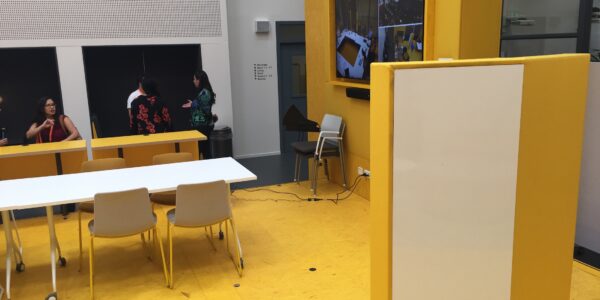
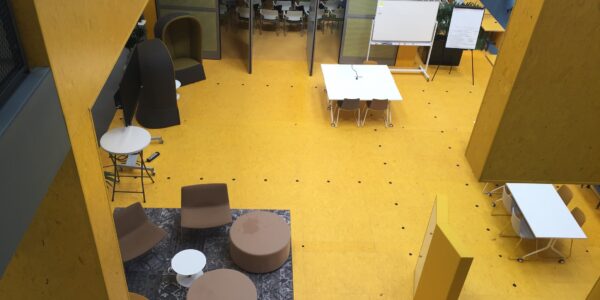
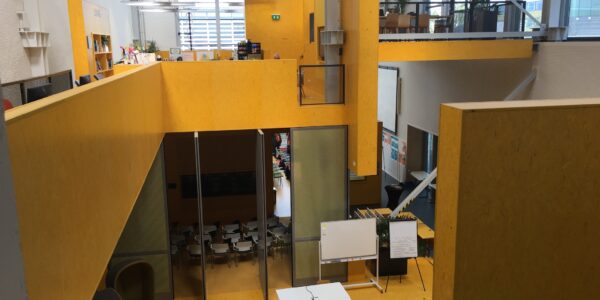
After making my way from the OER18 conference and Amsterdam I found myself in the city of Delft. I’d met open ed folks from TU Delft at past conferences, seen their MOOCs online, and heck we even used the Delft Design Method as our approach to the Instructional Design Service MOOC with Designers for Learning. The preconference began just after noon and included a tour of the TU Delft Teaching Lab. The afternoon consisted of a couple of small plenaries as was as concurrent sessions. Before beginning, we were treated to a tour of the space. This teaching lab is not a space where classes actually take place – unlike the spaces I’ve seen at the Helsingin Yliopisto, University of Saskatchewan, University of Alberta, and University of Calgary – but instead is a place for instructors at the institution to come and learn about and test out some new ideas to take back to their own classes. There were a number of different areas, each with a seemingly different purpose. Some were more like classrooms, some like meeting rooms, some like libraries, and others like coffee shops. The furniture and coloured OSB certainly gave the space a unique style.
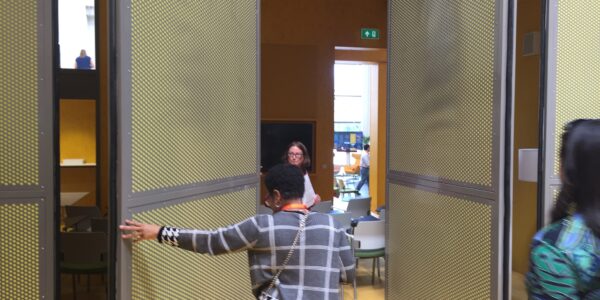
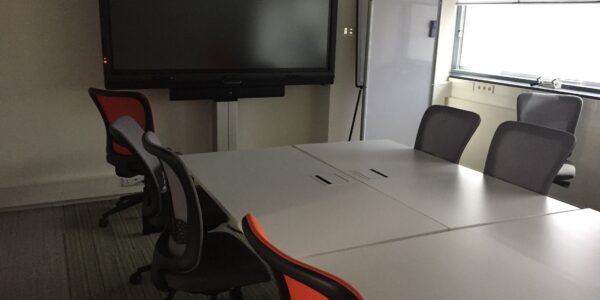
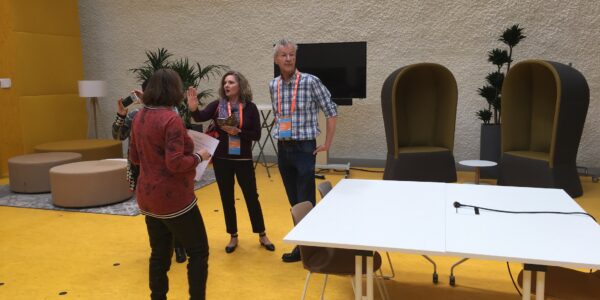
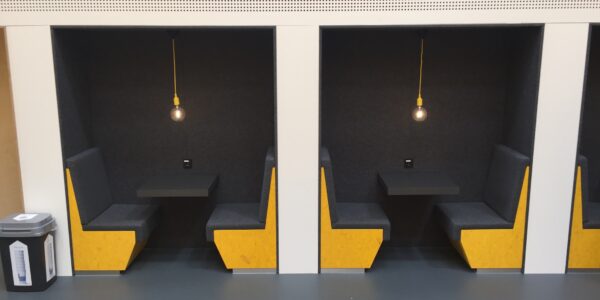
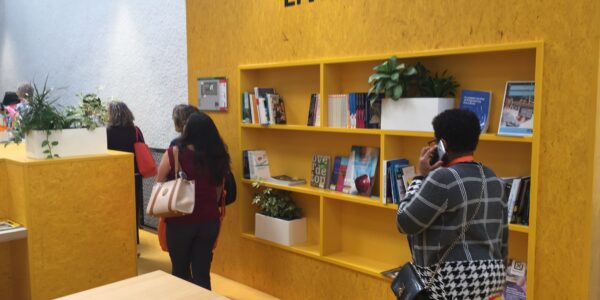
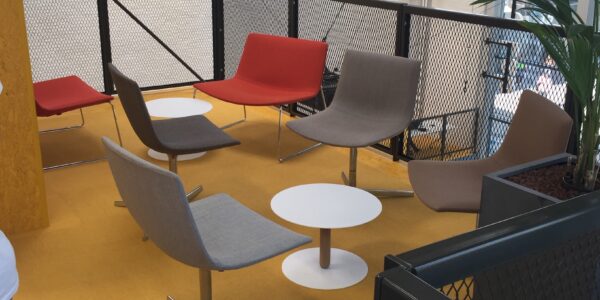
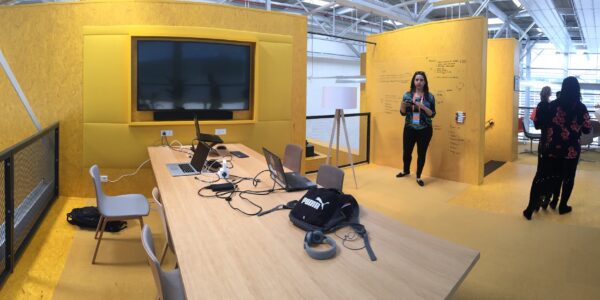
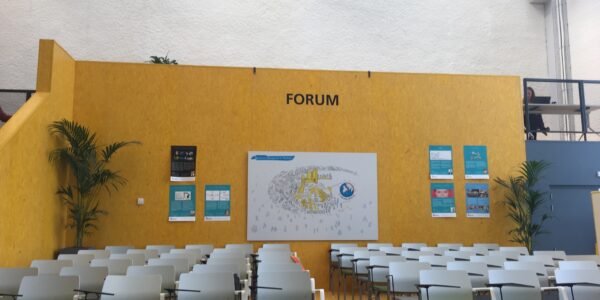
TU Delft has been in the Open Ed game for quite some time, and it seems that since 2013/14 (with the opening of the Extension school) that the primary vehicle for open here is through MOOCs. Open Ed is even included in their 2018 strategic framework. We were really given the impression that MOOCs have a role within the institution, beyond the rhetoric that often accompanies North American MOOCs. (As an aside, I was pretty thrilled that I went through the entire OER18 conference without really hearing the words “open textbook”. It was quite refreshing to be able to have conversations that went beyond this basic level. That was certainly countered while at OEGlobal, as in a single session you might have heard “MOOC” multiple times. So apologies for all of the MOOC mentions that are coming up in future posts).
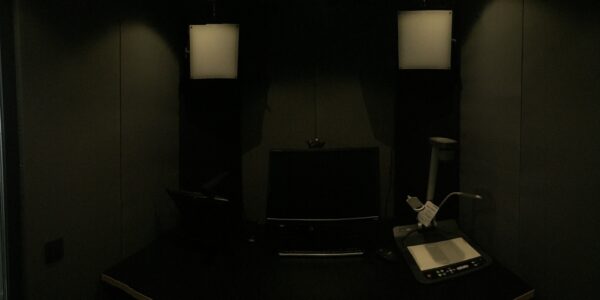
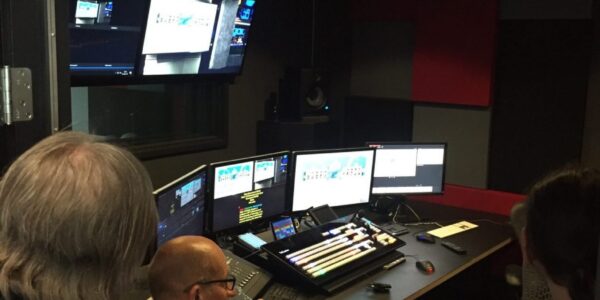
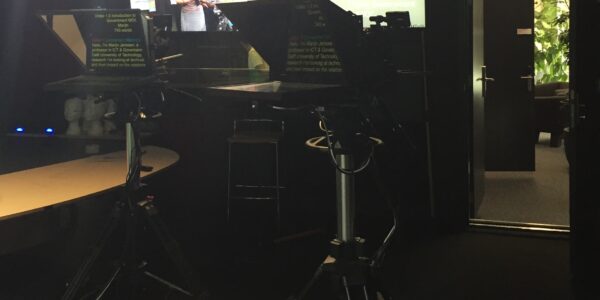
One of the concurrent sessions I attended was a tour of the New Media Centre, where all the magic happens. I’ve worked with a number of different media groups based within universities as well as a few that were outside of the university, but did media work for the institution. Most of the work that comes through this unit seems to be for education (mostly MOOCs), some knowledge mobilization, and a little marketing with a throughput of about 3-4 videos published per day. What I was most interested in was the workflow they had to ensure projects didn’t need to keep coming back for revisions, but also that kept costs low (although production is still more costly than I think anyone is willing to acknowledge). The process, once the tender was approved, begins with a scoping meeting, followed by a couple of days training for the instructor (script writing and storyboarding) which is also available as an online module, studio prep and recording, copyright, and as little post-production as possible. This means that using the script they record entire 6-8 minute clips in one shot. It’s pretty impressive that they do get full scripts in, as I find instructors sometimes struggle with scripting and storyboarding, but I definitely see where it saves time, energy, and money.
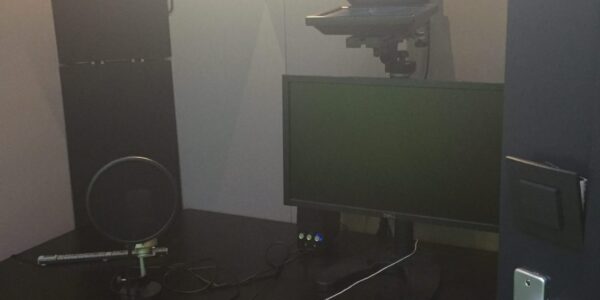
The media centre also has a small “DIY” studio set up for instructors that maybe want to just fly solo.
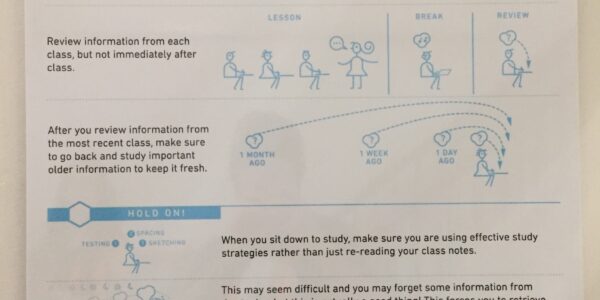
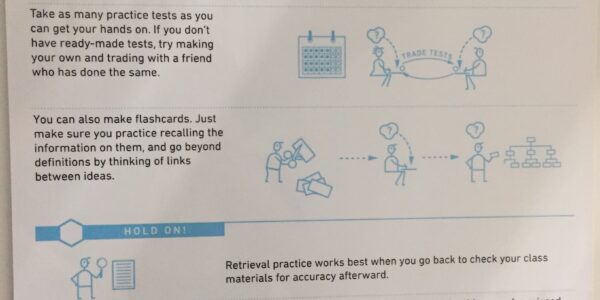
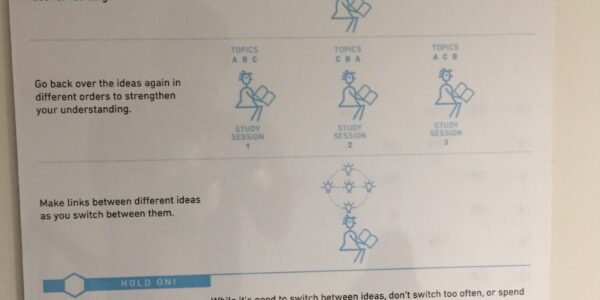
Touring around the teaching centre I also noticed a bunch of posters highlighting different teaching practices and concepts. I think there were a nice touch and it’d be nice to see more of these in CTLs and other instructional design shops around universities. I just had an instructor the other day notice two print-outs of “ways to check for understanding” and “fundamentals of online instruction” and they were really interested in discussing and getting copies of each. Those kinds of small nudges I think make a big difference.
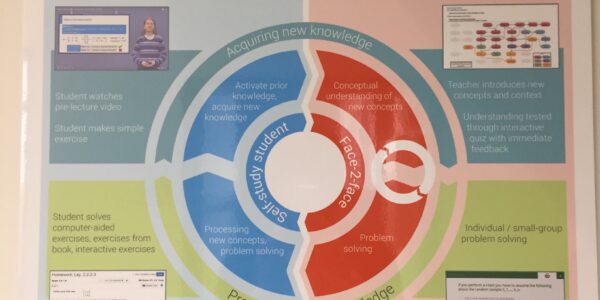
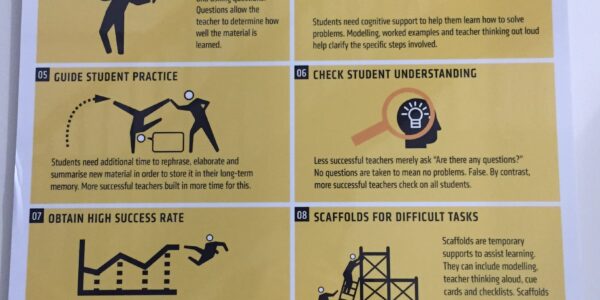
Finally I attended a session where the presenters talked about their approach to designing MOOCs. I wasn’t so interested in the MOOC part as in the general process of developing courses at TU Delft. A tender goes out about 3-4 times a year and instructors submit proposals. Upon acceptance they acquire funding to make use of different services such as educational development, instructional design, and media production. This kind of application process is one I’ve seen before, and I think it has merit over some more casual approaches for whole course & program developments. The whole process takes about 9 months from acceptance to published, which is what any course developer in higher ed could hope for. The focus of future developments is also not terribly surprising, CPL. I think we are going to see a lot more movement in this area from universities in the near future.
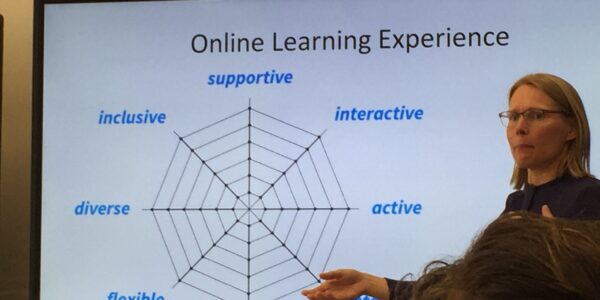
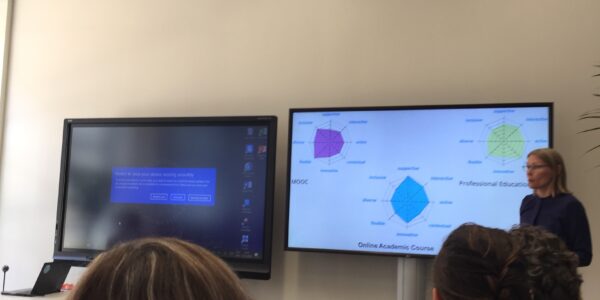
I found this ray diagram that the presenters talked about really interesting. Early on in the development they discuss with instructors about which of these elements is most important for their course or rather where the focus should be. I tend to fall back on Moore’s interaction model of student-content, student-teacher, student-student interactions and what each of those looks like in a given course. With a little bit more reading on this approach presented at Delft I think I’d be willing to try out this framework if the right project comes along.